Logs
Clicks Logs
One row per inbound click redirected through LeadJourney's tracking — visitor IP, location, device, the traffic channel and the full campaign attribution behind every click.
Clicks Logs is your most detailed view. It holds one row per inbound click that was redirected through LeadJourney's tracking link – before any conversion happens. Open it from Settings → Logs → Clicks Logs, or go straight to app.leadjourney.io/settings?slug=logs.
Use it to confirm a specific click came through, see where a visitor came from, and check the campaign attribution that LeadJourney assigned to the click.
What a click row records
Each row is a single visitor click. The columns are grouped by what they describe:
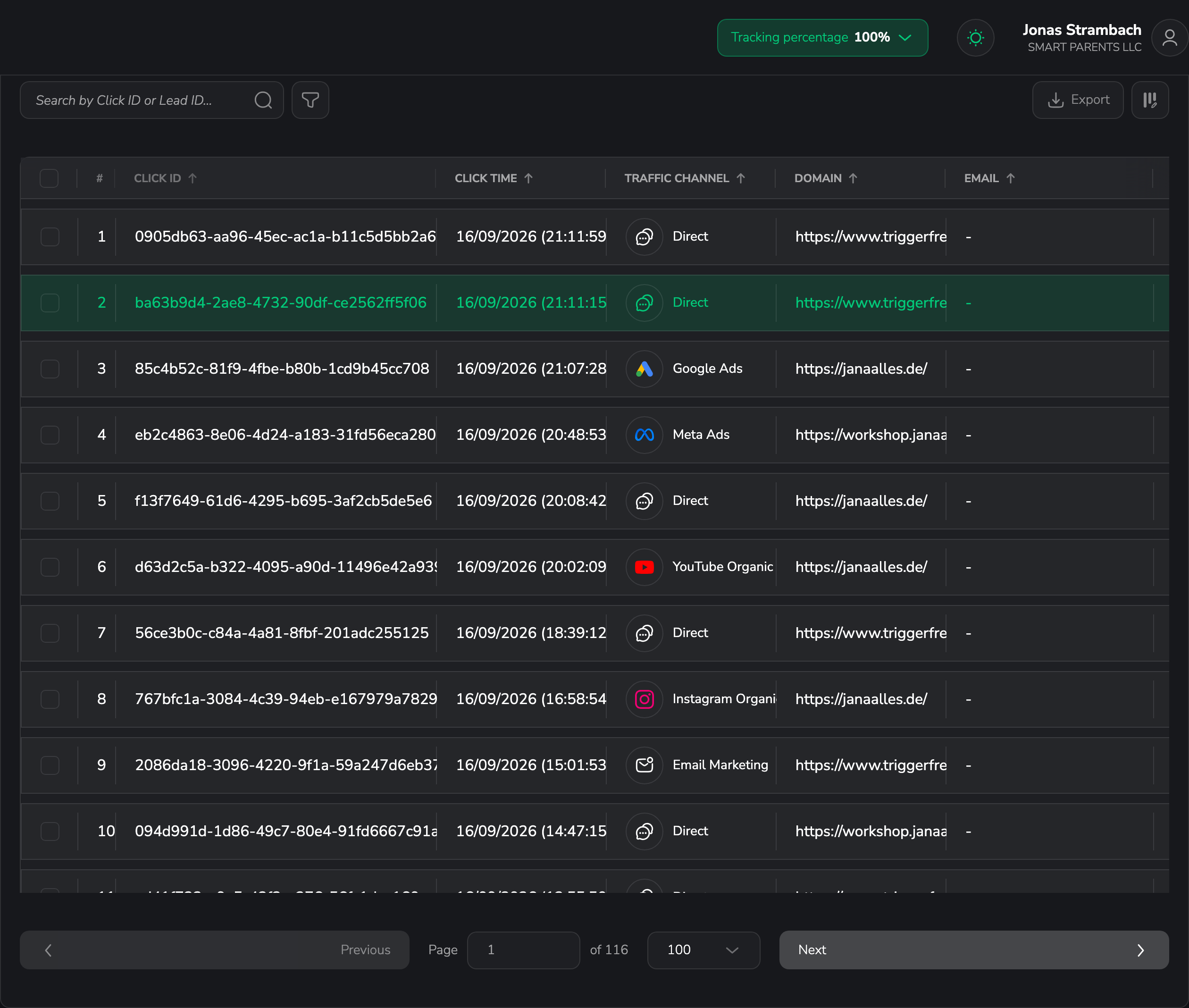
- Identity & time – Click ID (the unique ID for the click) and Click Time.
- Traffic source – Traffic Channel (shown with its channel icon), Domain, Referrer and Entry Full URL (the exact landing-page URL the click reached).
- Visitor – IP, ISP, Connection Type, Country, City, OS, Browser, Device and the full User Agent.
- Attribution – Campaign, Ad Group, Ad, Keyword, Placement, Aset (asset/creative) and Ref ID, plus the captured Email where available.
The Click ID column is mandatory and always stays visible. You can show, hide, reorder and resize the rest – see Customize the columns.
Timestamps and currency
Click Time follows your workspace time zone. See Change your workspace time zone.
Filters specific to Clicks Logs
On top of the shared filters, Clicks Logs adds:
- Traffic channel (multi-select) – Clicks Logs is the only tab where you can filter to several channels at once.
- Search by Click ID – jump straight to a single click.
- Advanced filters – build AND/OR rules across any click column, for example Country is DE and Device is Mobile.
Clean up test clicks
When you tick one or more rows, a bulk-action bar appears. On Clicks Logs you can Delete the selected rows, and you can also delete a single row from its row menu.
Deleting clicks can't be undone
Deleting clicks is permanent and will change the numbers in your reports. Only delete rows that were created for testing or that you know contain incorrect data.
Related articles
Understanding your logs
The Logs tab shows the raw clicks, conversions, postbacks and cost updates behind your LeadJourney reports. Learn where to find them and the tools — filters, columns, sorting and CSV export — that work across every log.
Conversions Logs
One row per conversion event — a sale, signup or lead — attributed back to a click, with revenue, cash collected and the lead's contact details.